
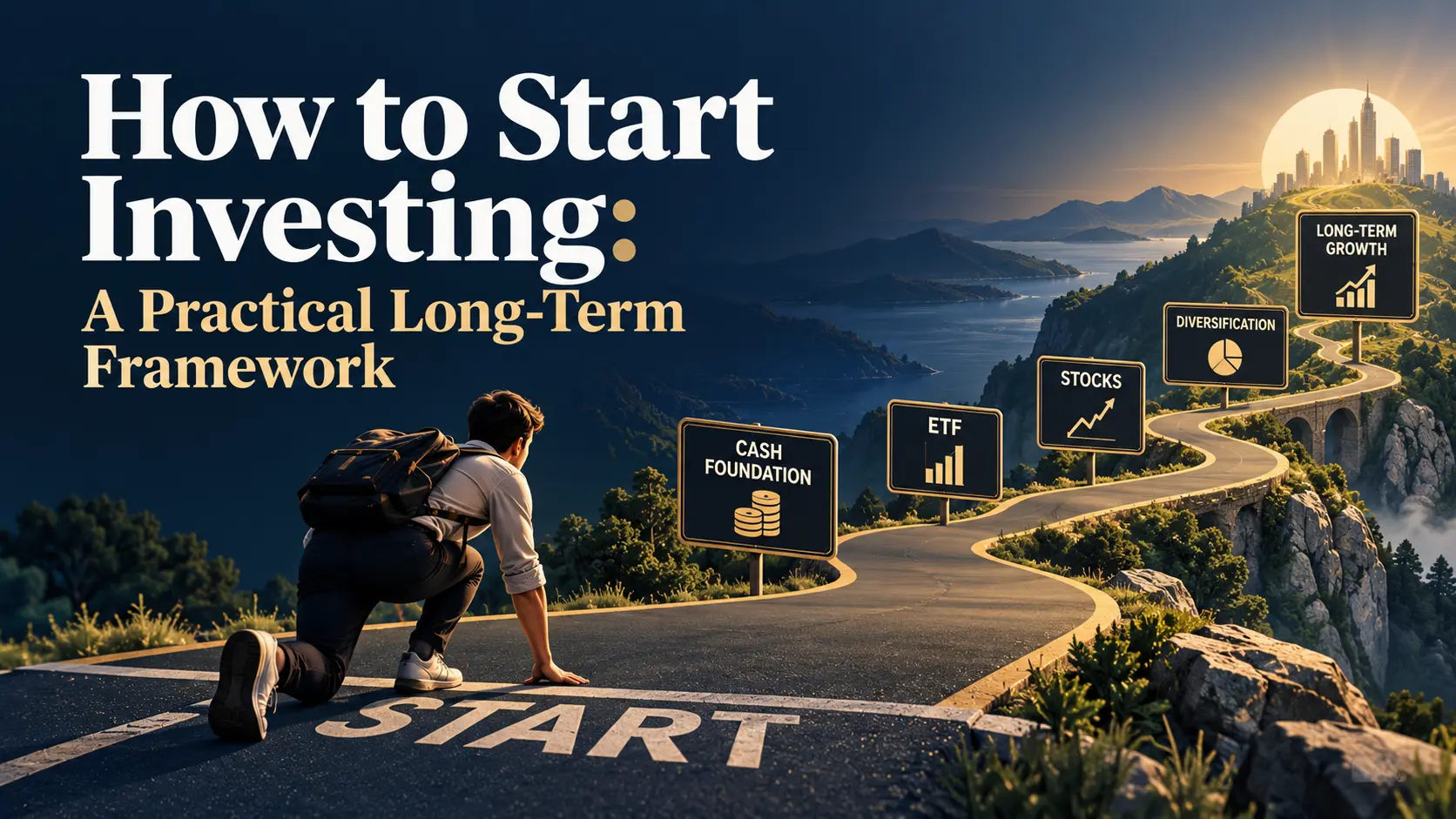
Learning how to start investing is less about finding the next winning stock and more about building a disciplined process for allocating capital, managing risk, and allowing time to work in your favor.
A good investment framework does not begin with a ticker symbol. It begins with a few basic questions: What are you investing for? When will you need the money? How much risk can you realistically tolerate? And which combination of assets gives you the best chance of reaching that objective without taking unnecessary risks?
Learning how to invest money as early as possible is an important part of financial education, yet it is still something that many schools, including universities, rarely teach in a practical way.
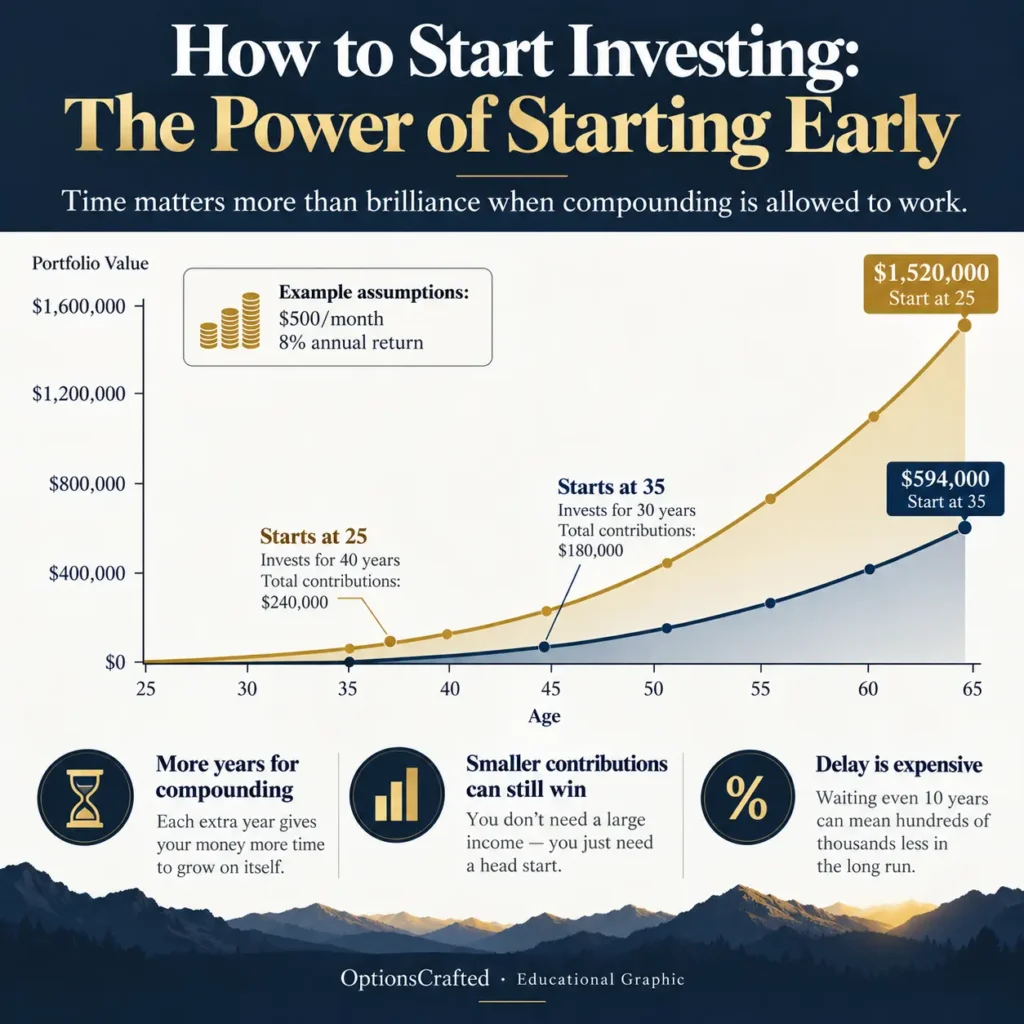
That knowledge can have a major influence on a person’s long-term financial position. Starting early allows more time for compounding to work, encourages better saving and spending habits, reduces dependence on debt, and makes it easier to build financial resilience. It can also affect major life choices by creating greater freedom around careers, entrepreneurship, housing, retirement, and the ability to deal with unexpected expenses.
Just as importantly, understanding basic investing principles helps people distinguish between investing and speculation, evaluate risk more rationally, avoid expensive financial products, and make decisions without relying entirely on advisers, social media, or market hype.
For that reason, learning how to manage, preserve, and invest capital should be considered a basic life skill, not specialist knowledge reserved for finance professionals.
This guide explains the foundations of long-term investing and provides a practical framework for building a portfolio around five principles: Quality, Valuation, Allocation, Risk, and Time.
Table of Contents
How to Start Investing: The Short Answer
If you are starting from scratch, the process can be reduced to a few essential steps:
- Build an adequate cash reserve before investing money you may need soon.
- Define your financial objectives and investment horizon.
- Understand how much volatility and permanent capital loss you can tolerate.
- Choose an appropriate mix of asset classes.
- Use diversified, liquid investments as the foundation of the portfolio.
- Consider valuation before committing capital.
- Invest consistently and rebalance when necessary.
- Avoid changing strategy because of short-term market noise.
The mechanics of investing are relatively simple. The difficult part is building a process that remains rational when markets are rising rapidly, falling sharply, or doing almost nothing.
The OptionsCrafted framework:
Quality → Valuation → Allocation → Risk → Time
1. What Investing Actually Means
Investing means committing capital to an asset with the expectation that the asset will produce future economic value.
That value can come from several sources:
- business earnings;
- dividends;
- interest payments;
- rental or productive income;
- long-term growth in the underlying asset;
- or a combination of these.
A share of stock represents ownership in a business. A bond represents a contractual claim on future payments. A property can generate rent. Cash and short-term securities can provide liquidity and interest income.
The important distinction is that investing is connected to an underlying economic mechanism. Price movements matter, but they are not the only reason the investment exists.
For a broader introduction to the mechanics of investing, the U.S. Securities and Exchange Commission’s Investor.gov introduction to investing covers investment returns, risk, compound growth, and common investment products.
2. Saving, Investing, and Speculating Are Different Activities
Saving, investing, and speculating are often mixed together, although they solve different financial problems.
Saving
Saving prioritizes capital preservation and liquidity.
Money intended for emergencies, near-term expenses, or known commitments should generally not depend on volatile market prices when you need it.
Investing
Investing accepts some uncertainty today in exchange for the possibility of greater purchasing power and income in the future.
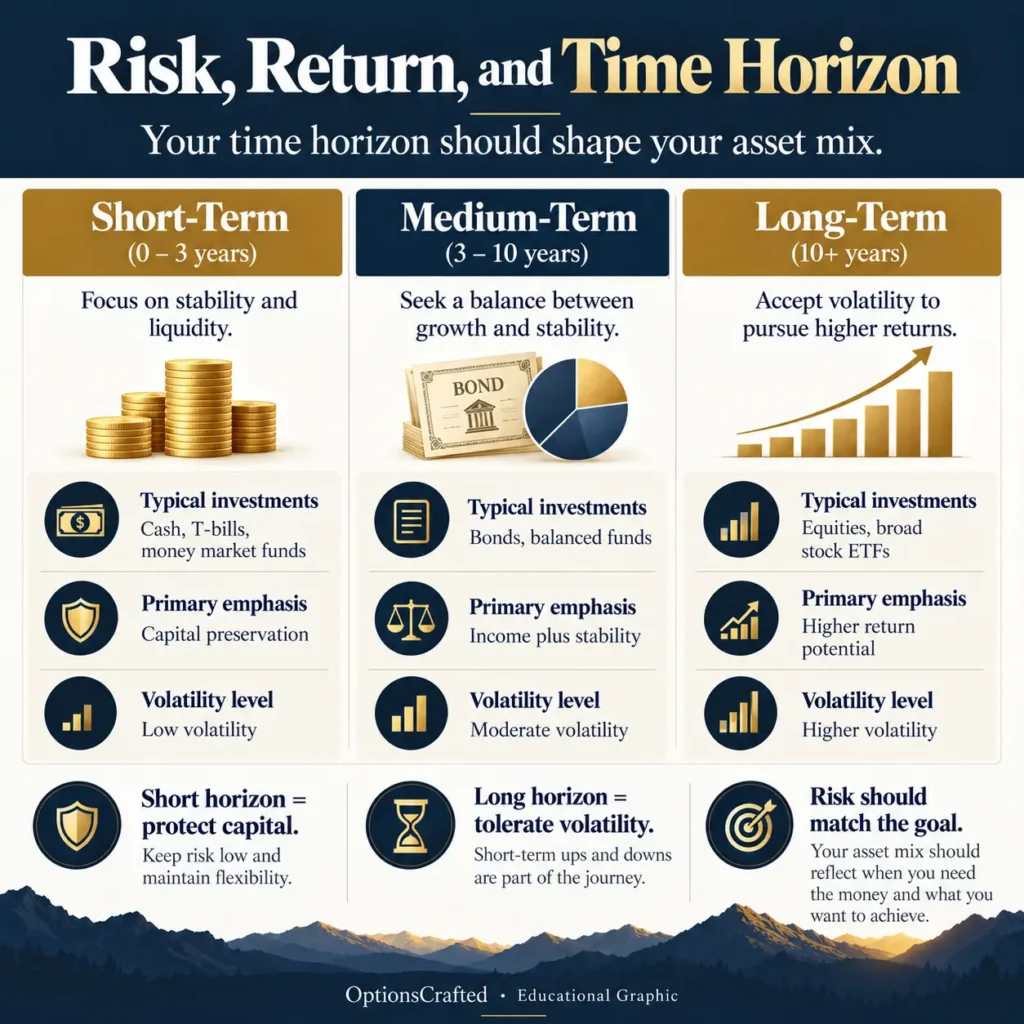
Time is therefore an important component of investing. The longer the horizon, the greater an investor’s ability to tolerate temporary fluctuations, provided the underlying investments and portfolio structure remain sound.
Speculating
Speculation focuses more heavily on future price changes than on the productive value or cash-generating ability of the underlying asset.
There is nothing inherently illegitimate about speculation. The problem begins when speculative positions are treated as though they were long-term investments and sized accordingly.
A disciplined investor knows which activity is being undertaken before capital is committed.
3. Define Your Objective Before Choosing Investments
A portfolio only makes sense in relation to the objective it is supposed to achieve.
Someone investing for retirement thirty years from now has a fundamentally different problem from someone planning to purchase a home in three years.
Before selecting assets, define:
- Objective: What is the capital ultimately for?
- Time horizon: When might the money be required?
- Income needs: Do you need cash flow today or growth for later?
- Liquidity needs: How quickly might you need access to the capital?
- Risk capacity: How much loss can your financial situation withstand?
- Risk tolerance: How much volatility can you tolerate psychologically?
Risk capacity and risk tolerance are not the same thing.
An investor may be emotionally comfortable taking substantial risks but financially unable to absorb them. Another investor may have substantial financial capacity for risk but very little tolerance for large portfolio fluctuations.
A sensible portfolio has to respect both.
4. Understand Risk Before Thinking About Return
Investors naturally focus on return. Portfolio construction should begin with risk.
Investment risk can take several forms:
- permanent loss of capital;
- excessive concentration in one company, sector, or country;
- liquidity risk;
- credit risk;
- inflation risk;
- currency risk;
- valuation risk;
- and behavioral risk.
Volatility deserves particular attention because it is frequently confused with risk.
Volatility measures how much prices move. It can be uncomfortable, but a temporary decline in the price of a sound asset is not automatically a permanent loss.
Permanent loss can occur when the economic value of an investment is impaired, when an investor is forced to sell under adverse conditions, or when the original investment thesis was simply wrong.
This distinction matters because a portfolio designed to eliminate every visible fluctuation may introduce other risks, including inadequate long-term returns or excessive exposure to inflation.
5. Understand the Main Asset Classes
Most long-term portfolios are built from a relatively small number of economic building blocks. The thousands of available financial products are largely variations on these foundations.
Equities
Stocks represent ownership in businesses. Their long-term return potential can come from earnings growth, dividends, share repurchases, and changes in valuation.
Equities can provide substantial long-term growth, but they can also experience significant drawdowns.
Bonds
Bonds are debt instruments. Investors lend capital to governments or companies in exchange for contractual interest payments and repayment terms.
Their behavior depends heavily on interest rates, duration, inflation, and credit quality.
Cash and Short-Term Instruments
Cash is not simply capital waiting to be invested.
It provides liquidity, optionality, and the ability to meet obligations without selling long-term assets at an inconvenient time.
Short-term government securities and money-market instruments can also generate income while preserving a relatively high degree of liquidity.
Real Assets
Real estate, commodities, infrastructure, and precious metals can respond to different economic forces from conventional financial assets.
They may therefore play useful roles in diversification, inflation protection, or broader portfolio resilience.
Alternative and Digital Assets
Alternative assets can offer genuinely different return drivers, but they may also introduce greater volatility, liquidity constraints, technological risks, regulatory risks, or valuation uncertainty.
They are generally better treated as deliberate portfolio components rather than automatic substitutes for a diversified core.
6. Asset Allocation Comes Before Security Selection
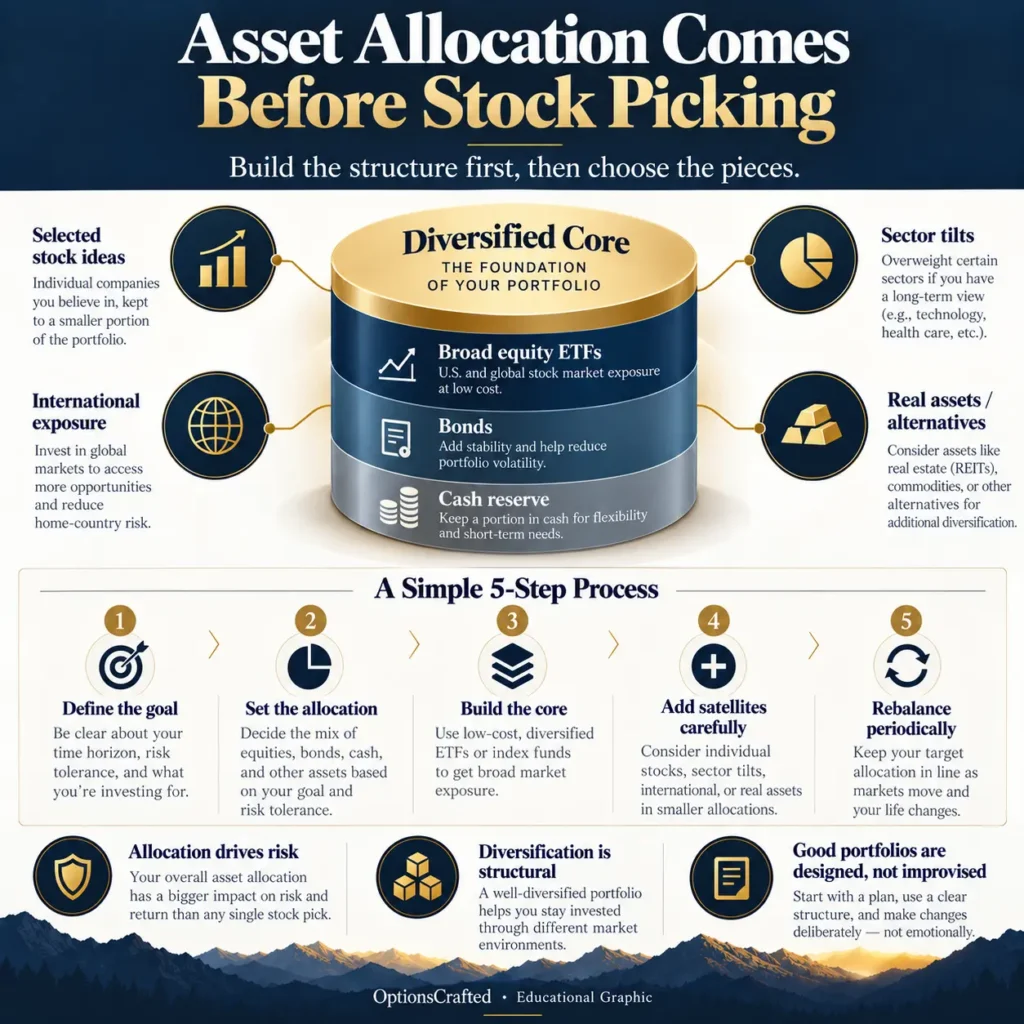
One of the most important decisions in investing is not which stock to buy. It is how much capital to allocate to different types of assets.
This is called asset allocation.
An investor could own excellent individual securities and still have a poorly constructed portfolio if those securities are excessively concentrated in the same economic risks.
For example, owning ten different technology companies does not necessarily provide the same diversification as owning assets influenced by genuinely different economic forces.
A useful asset allocation considers:
- expected return;
- volatility;
- correlation;
- liquidity;
- investment horizon;
- income requirements;
- and the investor’s capacity to withstand drawdowns.
The SEC’s guide to asset allocation and diversification provides a useful overview of how time horizon, risk tolerance, diversification, and rebalancing interact when constructing a portfolio.
We explore the subject in greater depth in the OptionsCrafted Asset Allocation guide.
7. Diversification Is About Different Risks, Not More Positions
Diversification is often described as simply owning many investments. That definition is incomplete.
The purpose of diversification is to avoid allowing one economic outcome to determine the future of the entire portfolio.
True diversification may involve differences in:
- companies;
- industries;
- countries;
- currencies;
- asset classes;
- interest-rate sensitivity;
- and economic regimes.
Adding a twentieth security that behaves almost identically to the previous nineteen may increase the number of holdings without meaningfully improving diversification.
The objective is not maximum diversification at any cost. It is sufficient diversification to prevent individual errors, company-specific problems, or a single economic scenario from becoming portfolio-level disasters.
8. ETFs vs Individual Stocks
One of the first practical decisions new investors face is whether to invest through exchange-traded funds or select individual companies.
ETFs
Exchange-traded funds can provide exposure to entire markets, sectors, countries, asset classes, or investment strategies through a single security.
For many investors, broad and liquid ETFs can make effective core holdings because they reduce company-specific risk and generally require less ongoing research than selecting and monitoring a portfolio of individual companies.
Before investing in an ETF, investors should understand what the fund owns, its investment objective, costs, risks, liquidity, and structure. The SEC provides a detailed guide to exchange-traded funds and the factors investors should examine before investing.
Individual Stocks
Individual stocks provide greater control over valuation, company quality, sector exposure, dividend characteristics, and position sizing.
That flexibility comes with additional responsibility. The investor must analyze the business, monitor its fundamentals, evaluate valuation, and accept greater company-specific risk.
The Core-Satellite Approach
The choice does not need to be binary.
A portfolio can use diversified ETFs as its core and selected individual securities as satellite positions where the investor has sufficient knowledge, conviction, and a clear reason for accepting additional concentration risk.
This approach can combine broad diversification with selective active decision-making.
For a deeper comparison, see ETFs vs Individual Stocks: How to Build the Core of Your Portfolio.
9. Why Valuation Matters
A good asset can still be a poor investment if the price paid already assumes an unrealistic future.
Valuation connects the economics of an asset with the price investors are being asked to pay for those economics.
For a company, useful valuation inputs can include:
- earnings;
- free cash flow;
- profitability;
- balance-sheet quality;
- growth;
- dividends;
- capital allocation;
- and the required rate of return.
Valuation is not a mechanism for identifying the exact future price of an asset.
It is a framework for asking a more useful question: What assumptions are embedded in today’s price, and are they reasonable?
Everything else being equal, a lower price relative to reasonable economic expectations creates a larger margin for error than paying a price that requires exceptionally optimistic future outcomes.
10. Cash Is Part of the Portfolio
Investors sometimes treat uninvested cash as evidence that something has gone wrong. That is not necessarily true.
Cash can perform several useful functions:
- fund emergency and near-term needs;
- reduce the probability of forced selling;
- provide capital for future opportunities;
- reduce overall portfolio volatility;
- and support strategies such as cash-secured puts.
The appropriate amount depends on the investor’s circumstances and opportunity set.
Holding too much cash for too long can reduce long-term compounding and expose purchasing power to inflation. Holding too little can leave an investor financially fragile or unable to take advantage of future opportunities.
The objective is therefore not to maximize or minimize cash. It is to give cash a defined role within the portfolio.
11. How to Build Your First Investment Portfolio
A first investment portfolio does not need to be complicated.
In fact, unnecessary complexity frequently creates more opportunities for mistakes without necessarily improving expected outcomes.
A sensible process can look like this:
Step 1: Separate Short-Term Money From Investment Capital
Do not rely on volatile investments for money you know you will need in the near future. Maintain sufficient liquidity for emergencies and foreseeable expenses.
Step 2: Establish a Strategic Allocation
Determine how much capital should be exposed to equities, fixed income, cash, and other assets based on your objectives, investment horizon, and risk profile.
Step 3: Build the Diversified Core
For many investors, liquid and diversified ETFs can provide a practical foundation for long-term portfolio exposure.
Step 4: Add Deliberate Satellite Positions
Individual stocks, sector exposures, real assets, digital assets, or other strategies should have a clear reason for being included.
Step 5: Evaluate Valuation
Avoid assuming that an attractive asset is automatically attractive at every price. Consider both the quality of the asset and the assumptions reflected in its current valuation.
Step 6: Define Position Sizes
A correct investment thesis with an inappropriate position size can still create an unacceptable portfolio outcome.
Step 7: Invest According to a Repeatable Process
Whether capital is deployed immediately, gradually, or opportunistically, the method should be defined before short-term emotions begin influencing the decision.
12. Investing a Lump Sum vs Investing Gradually
Investors with new capital often face another decision: invest immediately or spread the investment over time?
These approaches solve different problems.
A lump-sum investment maximizes the amount of time that capital is exposed to the chosen assets. Gradual investing can reduce the psychological and timing impact of committing all capital immediately before a large market decline.
One systematic method is dollar-cost averaging, which involves investing equal amounts at regular intervals regardless of short-term market movements. Investor.gov provides a concise definition of dollar-cost averaging and how the approach works.
There is no universal answer because the appropriate choice depends on:
- valuation;
- portfolio composition;
- market conditions;
- the size of the capital relative to existing wealth;
- the investor’s time horizon;
- and behavioral tolerance.
The important point is to use a predefined process rather than continually postponing investment while waiting for an ideal entry point that may never become obvious in real time.
13. Rebalancing: Maintaining the Portfolio You Intended to Own
Portfolio allocations change naturally as asset prices move.
If equities outperform other assets for several years, for example, a balanced portfolio can gradually become much more equity-heavy than originally intended.
Rebalancing restores the portfolio toward its target allocation.
It can be performed:
- at predetermined intervals;
- when allocations move beyond defined tolerance bands;
- or through new contributions directed toward underweight assets.
Rebalancing is not primarily a market forecast. It is a portfolio risk-control mechanism.
It helps keep portfolio exposure connected to the investor’s intended strategy rather than allowing recent market performance alone to determine future risk.
14. Common Mistakes New Investors Make
Starting With Individual Securities Instead of a Portfolio Plan
Security selection should follow portfolio design, not replace it.
Chasing Recent Performance
Assets that have performed exceptionally well naturally attract attention. But strong recent performance can also mean that optimistic expectations are already incorporated into prices.
Ignoring Valuation
Investment quality and investment price are related but separate questions. Even an excellent company can provide disappointing returns when purchased at an excessive valuation.
Taking More Risk Than Necessary
Higher risk does not automatically produce higher realized returns. Some risks simply increase the probability of permanent loss without providing adequate compensation.
Trading Too Frequently
Activity can feel productive while generating transaction costs, taxes, behavioral errors, and decisions driven by short-term market noise.
Changing Strategy During Drawdowns
A strategy that only feels acceptable while markets are rising was probably never properly matched to the investor’s actual risk tolerance.
Waiting for Certainty
Financial markets rarely provide certainty at attractive prices.
The objective is not to eliminate uncertainty. It is to build a portfolio robust enough to operate within it.
15. The OptionsCrafted Investing Framework
At OptionsCrafted, we organize long-term investment decisions around five connected principles:
1. Quality
Begin with assets that have sound economic characteristics. For businesses, this includes fundamental strength, sustainable cash generation, competitive durability, and balance-sheet quality.
2. Valuation
Estimate what you are receiving relative to the price you are paying. A great asset purchased under unrealistic assumptions can still generate disappointing returns.
3. Allocation
Determine how the investment fits within the entire portfolio. A position should never be evaluated only in isolation.
4. Risk
Consider what can go wrong, how much capital is exposed, and whether failure of the thesis would threaten the broader portfolio.
5. Time
Allow compounding to work and avoid letting short-term market noise repeatedly interrupt a sound long-term process.
The framework can be expressed simply:
Quality → Valuation → Allocation → Risk → Time
The sequence matters.
The objective is not to predict every market movement. It is to create a structure in which good decisions can compound while individual mistakes remain survivable.
16. Where Options Fit Into Long-Term Investing
Options are not necessary to start investing.
They become useful when the investor already understands the underlying assets, portfolio structure, and risks involved.
Used conservatively and with appropriate risk controls, options can help investors:
- define desired entry prices;
- generate income from existing positions;
- manage specific portfolio risks;
- and structure investment outcomes more precisely.
A cash-secured put, for example, can allow an investor to receive a premium while accepting the obligation to buy an asset at a predetermined strike price. A covered call can generate premium income from shares already owned in exchange for accepting the obligation to sell those shares at the strike price if assigned.
Options should therefore sit on top of a sound investment framework, not substitute for one.
17. A Simple Checklist Before You Invest
Before committing capital, ask:
- What is the purpose of this investment?
- What is my expected holding period?
- What economic value does the asset produce?
- What price am I paying relative to that value?
- What could permanently impair the investment?
- How large should the position be?
- How does it interact with the rest of my portfolio?
- Under what conditions would I change my investment thesis?
If those questions cannot be answered clearly, more research is usually preferable to more activity.
Frequently Asked Questions About How to Start Investing
How much money do you need to start investing?
There is no universal minimum amount required to start investing. Modern brokerage platforms and ETFs make it possible to begin with relatively modest amounts of capital. What matters more is having an adequate cash reserve, keeping costs proportionate to the amount invested, and establishing a process that can be repeated consistently.
What is the best investment for a beginner?
There is no single best investment for every beginner. For many investors, diversified and liquid funds can provide a practical foundation because they reduce company-specific risk and require less ongoing analysis than a portfolio composed entirely of individual securities. The appropriate choice still depends on objectives, time horizon, liquidity needs, and risk tolerance.
Should beginners invest in individual stocks?
They can, but individual stocks require additional research and create greater company-specific risk. A diversified core combined with smaller individual positions can provide a useful middle ground for investors who want to learn fundamental analysis without making the entire portfolio dependent on stock selection read also more on our investing for beginners resources you will find great materials to improve your long-term investing knowledge or improve your investment portfolio (s).
Is it better to invest monthly or wait for market declines?
Consistent investing reduces dependence on accurately predicting market corrections. Investors can still maintain some liquidity for opportunities, but repeatedly delaying a long-term investment plan while waiting for an obvious market bottom can leave capital uninvested for extended periods.
How many investments should a portfolio contain?
There is no ideal number. Diversification depends on the economic exposures of the holdings, not simply the number of positions. A portfolio containing a few broad ETFs may be more diversified than one containing dozens of highly correlated individual stocks.
When should you rebalance a portfolio?
Rebalancing can be performed periodically or when allocations move beyond predetermined tolerance ranges. The purpose is to keep portfolio risk consistent with the investor’s intended strategy rather than to forecast short-term market movements.
Do you need options to be a successful investor?
No. Options are additional portfolio tools, not a prerequisite for successful investing. They are most useful after an investor understands asset selection, valuation, portfolio construction, position sizing, and risk management.
Final Thoughts
Learning how to start investing is ultimately less about discovering a perfect portfolio and more about developing a process that remains rational across different market environments.
Begin with your objectives. Understand your risks. Build a diversified allocation. Pay attention to valuation. Maintain adequate liquidity. Allow time to compound good decisions.
Individual investments will change. Markets will change. Economic regimes will change. A sound decision framework should remain useful through all of them.
That is the foundation on which the rest of OptionsCrafted is built: Quality, Valuation, Allocation, Risk, and Time.